- hrtdmedicalinstitute.dhaka@gmail.com
- +88 01784-572173

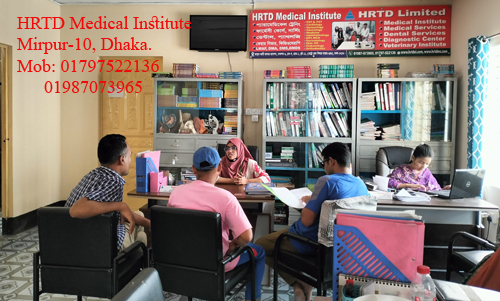
Medical Management Course 1 Year
Medical Management Course 1 Year Tk 70500/-
Teachers for Hospital Management Course in Dhaka, Bangladesh
Teachers for the Medical Management Course. Mobile No. 01987-073965, 01797-522136. Dr. Sakulur Rahman, MBBS, CCD, Dr. Sanjana, BDS, MPH, Dr. Suhana, MBBS, PGT, Dr. Amina Afroze Anu, MBBS, PGT, Engr. Shahabuddin, BSc in Software Engineering, Md. Shariful Islam Sarkar, BSc, DMS, MBA, Md. Shahidul Islam, MBA.
Subjects for Medical Management Course in Dhaka, Bangladesh
Medical Management Course Subjects. Mobile No. 01987-073965, 01797-522136.
1. Human Anatomy and Physiology,
2. Pharmacology and Pharmacy Management,
3. Medical Terminology in Hospital Management
4. First Aid and OTC Drugs
5. Practice of Medicine
6. Principles of Management
7. Human Resource Management in the Medical Sector
8. Hospital Outdoor Management
9. Hospital Indoor Management
10. Medical Marketing Management
Human Anatomy & Physiology for Medical Management
Human Anatomy and physiology is a subject of Medical Science that describes the structure and functions of the human body, such as the heart, lungs, kidneys, liver, brain, skeleton, skin, muscle, fat, and blood. This subject is important for Dental Courses.
This subject is common for all medical and dental students. There are some systems of the Human body: the Respiratory System, Digestive System, Blood and circulatory System, Nervous System, Endocrine System, Skeletal System, Muscular System, Immune System, Reproductive System, Integumentary System, Excretory System, Urinary System, Hepatobiliary System, Lymphatic System, etc. Every System is made up of some organs. The digestive System is made up of The Oral Cavity, Tongue, Teeth, Esophagus, Stomach or gastro, Small Intestine, Large Intestine, appendix, Rectum, and Anus. The respiratory System comprises the Nasal Cavity, Nasal conchae, Pharynx, Larynx, Trachea, bronchi, Right Lung, Left Lung, alveoli, and Pleura.
Pharmacology for Medical Management
Pharmacology is an important subject in medical science. The study of Drugs and Medicine is called Pharmacology. We study drug knowledge here. The most common points of drug knowledge are drug descriptions, Indications, dosage forms, Doses, Contraindications, Side Effects, Pregnancy Categories of Drugs, Drug Interactions, and drug Storage.
In Pharmacology-1, We provide drug knowledge of group-wise drugs and medicine such as Anti Inflammatory Drugs, NSAID Drugs, Steroid Drugs, Antiulcer Drugs, Anti Bacterial Drugs (Antibiotic Drugs), Anti Fungal Drugs, Anti Protozoa Drugs, Anti Viral Drugs, Anti Histamine Drugs, Anti Asthmatic Drugs, Analgesic Drugs, Anti Pyretic Drugs, Anthelmintic Drugs, Cardiovascular Drugs, Beta Blocker Drugs, Calcium Channel Blocker Drugs, Antiplatelet Drugs, Anti Diabetic Drugs, etc.
Principles of Management
Principles of management are guidelines that help managers direct and coordinate organizational activities towards achieving goals. They are often seen as fundamental rules or concepts that guide the management process. A well-known example is Henri Fayol's 14 Principles of Management.
Here's a more detailed breakdown:
1. Fayol's 14 Principles of Management:
These principles, developed by French engineer Henri Fayol, are a set of guidelines that provide a framework for managing businesses effectively. They include:
- Authority and Responsibility: Managers should have the authority to make decisions and be responsible for the outcomes.
- Discipline: Following rules and regulations and maintaining a positive work environment is crucial for smooth operations.
- Unity of Command: Employees should receive orders from only one superior to avoid confusion and conflict.
- Unity of Direction: All efforts within an organization should be directed towards the same goals.
- Subordination of Individual Interests: The interests of the organization should take precedence over individual interests.
- Remuneration: Employees should be fairly compensated for their work and efforts.
- Centralization: The degree to which decision-making authority is concentrated at the top or distributed throughout the organization.
- Scalar Chain: A clear chain of command from the top to the bottom of the organization.
- Order: Material and human resources should be kept in their proper place.
- Equity: Treating all employees fairly and justly.
- Stability of Tenure of Personnel: Low employee turnover is desirable for organizational stability and effectiveness.
- Initiative: Encouraging employees to take the initiative and contribute new ideas.
- Esprit de Corps: Fostering a sense of teamwork and unity among employees.
- Division of Work: Specializing in tasks and responsibilities can improve efficiency and expertise.
2. Other Important Principles:
- Planning: Setting goals and developing strategies to achieve them.
- Organizing: Structuring the work and resources to effectively implement plans.
- Leading: Inspiring and motivating employees to work towards common goals.
- Controlling: Monitoring performance and taking corrective action when necessary.
- Universal Applicability: Management principles are generally applicable across different types of organizations, regardless of size or sector, according to NCERT.
3. Importance of Principles of Management:
-
Efficiency and Effectiveness:
They help organizations operate efficiently and effectively by providing a framework for decision-making and resource allocation.
-
Coordination and Communication:
They promote coordination and communication among different parts of the organization.
-
Motivation and Morale:
Fair and equitable practices can improve employee motivation and morale.
-
Adaptability:
According to NCERT, while the principles offer a foundation, they can be adapted and applied in various situations and organizational contexts.
In summary, principles of management are essential guidelines that help managers navigate the complexities of organizational life and achieve their goals, says the NCERT.
Hospital Outdoor and Indoor Management
Hospital management encompasses both outdoor (outpatient and indoor (inpatient services. Outdoor management focuses on providing care to patients who visit the hospital for diagnosis, treatment, and follow-up without needing to stay overnight, while indoor management handles the care and supervision of inpatients who are admitted for extended treatment and monitoring.
Outdoor (Outpatient) Management:
- Outpatient Clinics: Provide specialized care for various conditions, including general medicine, pediatrics, and other specialties.
- Emergency Department: Offers immediate treatment for urgent medical conditions.
- Diagnostic Services: Includes procedures like imaging, laboratory tests, and other diagnostic investigations.
- Appointment Scheduling: Managing patient appointments for outpatient consultations.
- Patient Registration and Billing: Handling patient information and financial transactions related to outpatient care.
- Pharmacy Management: Dispensing medications for outpatient use.
- Patient Relations: Addressing patient inquiries and complaints related to outpatient services.
Indoor (Inpatient) Management:
- Patient Admission: Managing the process of admitting patients to the hospital for inpatient treatment.
- Bed and Ward Management: Allocating and monitoring bed availability in various wards and patient rooms.
- Operating Theatre (OT) Services: Managing surgical procedures and post-operative care.
- Doctor Consultation and Care Plans: Managing doctor consultations, medical records, and patient care plans.
- Patient Billing and Discharge: Handling financial aspects of inpatient care and the process of discharging patients.
- Patient Relations: Addressing patient and family concerns during their inpatient stay.
- Inventory Management: Managing the supply of medical equipment, supplies, and medications used in the hospital.
Human Resource Management
Human resource management (HRM) is the strategic process of managing an organization's employees to maximize their performance and align them with the company's objectives. It involves functions like recruiting, hiring, training, compensating, and retaining staff, to achieve a competitive advantage and ensure the business meets its strategic goals.
Key functions
- Performance management: Setting goals, monitoring performance, and providing feedback and support.
- Training and development: Providing opportunities for employees to learn new skills and advance professionally.
- Employee relations: Fostering a positive work environment and managing disputes.
- Compliance: Ensuring the organization adheres to all relevant labor laws and regulations.
- Staffing and retention: Building and maintaining the workforce, which includes strategies to keep employees engaged.
- Recruitment and selection: Identifying and hiring the right talent to fill job openings.
- Compensation and benefits: Developing and administering pay, insurance, retirement plans, and other benefits.
Strategic importance
-
Competitive advantage:
HRM views employees as a key resource, and effectively managing them can give a business a competitive edge.
-
Strategic partnership:
The HR department works closely with executive administration to ensure human resource strategies support the overall business objectives.
-
Organizational success:
By investing in human capital through hiring, training, and fair rewards, organizations can improve their overall performance and success.
Medical Marketing Management
Hospital marketing management is the strategic planning, implementation, and oversight of promotional activities to attract patients and build the hospital's brand, reputation, and community trust. This involves a blend of digital and traditional tactics like SEO, content marketing, social media, targeted advertising, and public relations to educate the public about services, manage the hospital's image, and achieve business goals while adhering to healthcare regulations.
Key aspects of hospital marketing management
- Strategic planning: Developing a comprehensive plan that includes market analysis, identifying target audiences, and setting measurable goals (SMART goals).
- Brand building: Creating and maintaining a consistent brand identity across all platforms to build trust and recognition.
- Digital marketing:
- Search Engine Optimization (SEO): Making the hospital's website visible in search results for relevant health-related queries.
- Content Marketing: Creating and distributing valuable content like blogs, videos, and articles to educate the public and establish the hospital as an authority.
- Social Media: Engaging with patients, raising awareness, and managing reputation through platforms like Facebook, Instagram, and others.
- Targeted Advertising: Running paid campaigns to reach specific patient demographics with relevant service information.
- Reputation management: Proactively monitoring and responding to online reviews and mentions to maintain a positive public image.
- Community engagement: Building relationships with the local community through outreach programs and events.
- Patient experience: Using marketing to guide patients through their healthcare journey, improve service delivery, and foster long-term loyalty.
- Regulatory compliance: Ensuring all marketing activities comply with healthcare regulations, such as HIPAA.
Tools and tactics
- Healthcare CRM systems: Utilizing Customer Relationship Management systems to manage patient data and personalize outreach.
- Conversation intelligence: Using tools to analyze marketing-related calls to understand patient needs and optimize campaigns.
- Traditional advertising: Utilizing offline methods such as print, radio, and television ads.
- Physician relationship development: Building strong relationships with doctors and other healthcare professionals to encourage referrals and collaboration.
Hostel Facilities & Meal Facilities
The Institute has hostel facilities for the students. Students can take a bed in the hostel.
Hostel Fee Tk 3000/- Per Month
Meal Charges Tk 3000/- Per Month.
হোস্টেল সুবিধা ও খাবার সুবিধা
ইনস্টিটিউটে শিক্ষার্থীদের জন্য হোস্টেল সুবিধা রয়েছে। ছাত্ররা হোস্টেলে বিছানা নিতে পারে।
হোস্টেল ফি 3000/- টাকা প্রতি মাসে,
খাবারের চার্জ 3000/- টাকা প্রতি মাসে।
আমাদের ঠিকানাঃ HRTD মেডিকেল ইন্সটিটিউট, আব্দুল আলী মাদবর ম্যানশন, সেকশন ৬, ব্লোক খ, রোড ১, প্লট ১১, মেট্রোরেল পিলার নাম্বার ২৪৯, ফলপট্টি মসজিদ গলি, মিরপুর ১০ গোলচত্ত্বর, ঢাকা ১২১৬ । মোবাইল ফোন নাম্বার ০১৭৯৭৫২২১৩৬, ০১৯৮৭০৭৩৯৬৫ ।
Our Address: HRTD Medical Institute, Abdul Ali Madbor Mansion, Section-6, Block- Kha, Road- 1, Plot- 11, Metro Rail Pilar No. 249, Falpatty Mosjid Goli, Mirpur-10 Golchattar, Dhaka 1216. Mobile Phone No. 01797522136, 01987073965.